Nutritional Breakdown: How Freshness Affects the Superfood Power of Nuts
By Neha Verma (Health Writer) · 25 June 2026
Nutritional Breakdown: How Freshness Affects the Superfood Power of Nuts
Nuts have long been celebrated as one of nature's most powerful superfoods. Packed with healthy fats, proteins, vitamins, minerals, and antioxidants, they are a staple in Indian households and a cornerstone of healthy snacking. But here is a question that most people never think to ask: does the freshness of nuts affect their nutritional value? The answer is a resounding yes — and understanding this connection can completely change the way you buy, store, and consume your favourite nuts.
At Nutriwow, we believe that the journey from farm to snack bowl matters enormously. It is not just about what goes into a nut — it is about how well that nutrition is preserved by the time it reaches you. Let us take a deep dive into the nutritional breakdown of Nutsand explore exactly how freshness influences their superfood power.
Why Nuts Are Called Superfoods in the First Place
Before understanding how freshness affects nuts, it helps to appreciate what makes them nutritionally exceptional. Nuts are dense sources of:
- Healthy unsaturated fats — including omega-3 and omega-6 fatty acids that support heart health
- Plant-based protein — essential for muscle repair, energy, and satiety
- Dietary fibre — which aids digestion and regulates blood sugar
- Vitamins — particularly Vitamin E, B-complex vitamins, and folate
- Minerals — such as magnesium, zinc, selenium, and potassium
- Antioxidants — including polyphenols that fight oxidative stress and inflammation
These nutrients work together to protect the heart, boost brain function, support immunity, and even reduce the risk of chronic diseases. However, all of these benefits are contingent on one critical factor — freshness.
How Staleness and Rancidity Destroy Nutritional Value
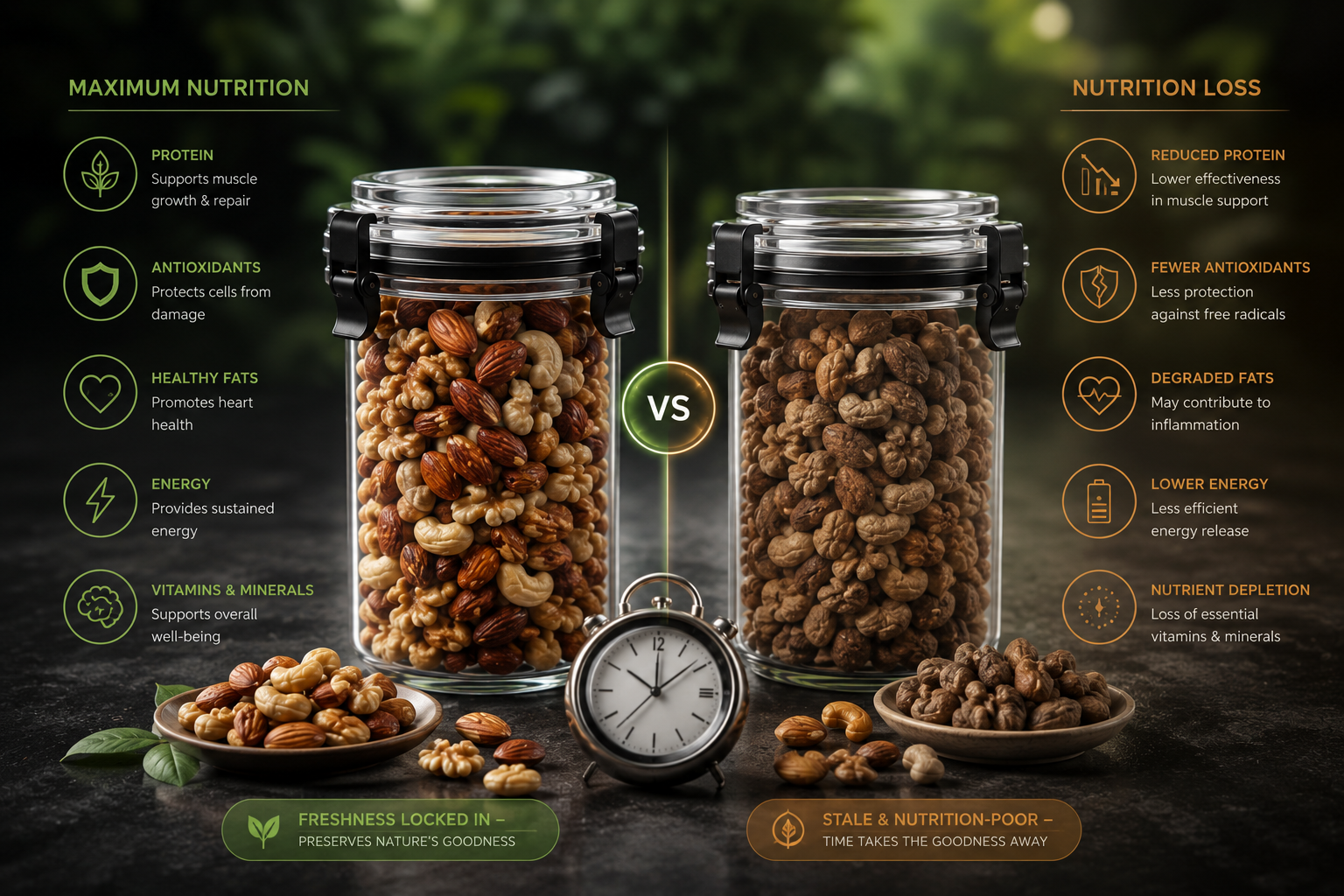
The biggest enemy of nut nutrition is rancidity — a process that occurs when the healthy fats in nuts are exposed to oxygen, heat, or light. This chemical process, known as oxidation, breaks down the fatty acids in nuts, turning beneficial fats into harmful compounds called free radicals.
When you consume rancid nuts, you are not just missing out on nutrition — you are potentially ingesting harmful oxidised fats that contribute to inflammation, cellular damage, and increased risk of chronic illness. This is the opposite of everything a superfood should do for your body.
Here is what specifically happens to key nutrients when nuts lose their freshness:
1. Fatty Acids Degrade
The omega-3 and omega-6 fatty acids in walnuts, almonds, and cashews begin to oxidise when exposed to air. These once heart-healthy fats become pro-inflammatory, completely reversing their nutritional benefit. You can detect early-stage rancidity by a sharp, bitter, or paint-like smell.
2. Vitamin E Levels Drop Significantly
Vitamin E is a powerful antioxidant found abundantly in almonds and hazelnuts. However, because it is a fat-soluble vitamin, it is highly vulnerable to oxidation. Stale nuts lose a significant portion of their Vitamin E content, reducing their ability to neutralise free radicals in the body.
3. Antioxidant Potency Declines
Research has shown that the polyphenol content of nuts decreases as they age and are exposed to environmental elements. These polyphenols are responsible for the anti-inflammatory and anti-cancer properties attributed to nuts. Fresh nuts contain far greater antioxidant activity than their stale counterparts.
4. Protein Quality May Be Compromised
While proteins in nuts are generally more stable than fats, prolonged storage under poor conditions — especially heat and humidity — can cause protein degradation, reducing the biological value of the amino acids present.
The Role of Food Safety in Nut Freshness
Beyond nutrition, food safety is another critical reason to pay close attention to nut freshness. Improperly stored nuts can become breeding grounds for aflatoxins — toxic compounds produced by mould, particularly Aspergillus species. These moulds thrive in warm, humid conditions, making poorly stored nuts in Indian climates especially vulnerable.
Aflatoxins are classified as Group 1 carcinogens by the World Health Organisation, meaning they are definitively linked to cancer in humans. This is not a minor concern — it is a serious food safety issue that underscores why buying fresh, properly stored nuts from trusted brands like Nutriwow is so important.
At Nutriwow, every batch of nuts undergoes strict quality checks to ensure they are free from mould, contamination, and premature oxidation, so you receive only the safest, most nutritious product possible.
Storage Tips: How to Keep Nuts Fresh and Nutritious
Understanding how to keep nuts fresh is just as important as buying quality nuts in the first place. Here are proven, practical storage tips to maximise the nutritional life of your nuts:
1. Store in Airtight Containers
Exposure to air is the primary trigger for oxidation. Always transfer nuts from their original packaging into airtight glass or BPA-free plastic containers once opened. This significantly slows the rancidity process and helps preserve fatty acids, vitamins, and antioxidants.
2. Keep Away from Heat and Light
Heat and direct sunlight accelerate the breakdown of fats and vitamins. Store your nuts in a cool, dark pantry or cupboard, away from the stove, windows, or any heat source. Avoid keeping them near kitchen appliances that generate warmth.
3. Refrigerate or Freeze for Longer Shelf Life
For nuts you do not plan to consume within a few weeks, refrigeration is highly recommended. Freezing is even better for long-term storage — nuts can be frozen for up to a year without significant loss of nutritional value. When needed, simply thaw them at room temperature for a few minutes before eating.
4. Buy in Smaller Quantities
While buying in bulk might seem economical, it increases the risk of nuts going stale before you consume them. Buying smaller, fresher batches more frequently is a smarter approach for maintaining optimal nutrition.
5. Check for Signs of Staleness Before Eating
Always do a quick sensory check before consuming nuts. Fresh nuts should smell mild and slightly sweet or neutral. Any bitter, sour, or chemical odour is a red flag for rancidity. Additionally, a rubbery or overly dry texture can indicate quality degradation.
6. Avoid Moisture Exposure
Moisture encourages mould growth and speeds up oxidation. Never store nuts in humid environments or near moisture sources. Make sure your storage containers are completely dry before placing nuts inside them.
Why Choosing the Right Brand Makes All the Difference
The freshness of nuts does not begin at your home — it begins at the source. The way nuts are harvested, processed, packaged, and transported has a massive impact on the nutritional profile you ultimately consume. This is where brand trust becomes essential.
Nutriwow is committed to delivering nuts that retain their full superfood potential. Our sourcing processes prioritise minimal time between harvest and packaging, and our packaging technology is designed to lock in freshness by minimising oxygen and moisture exposure. We understand that Indian consumers deserve snacks that are not just tasty but genuinely health-promoting — and that is only possible when freshness is treated as a non-negotiable standard.
The Bottom Line
Nuts are extraordinary superfoods — but only when they are fresh. The nutritional power of healthy fats, Vitamin E, antioxidants, and proteins can be significantly diminished by poor storage, prolonged shelf life, or improper handling. By understanding how freshness affects nut nutrition and following smart storage tips, you can ensure that every handful of nuts you eat delivers the full health benefits nature intended.
Choose freshness. Choose quality. Choose Nutriwow — and make every nut count toward a healthier, stronger you.