Is It Better to Eat Makhana Raw or Roasted for Glucose Management?
By Vikram Joshi (Sports Nutrition Advisor) · 23 June 2026
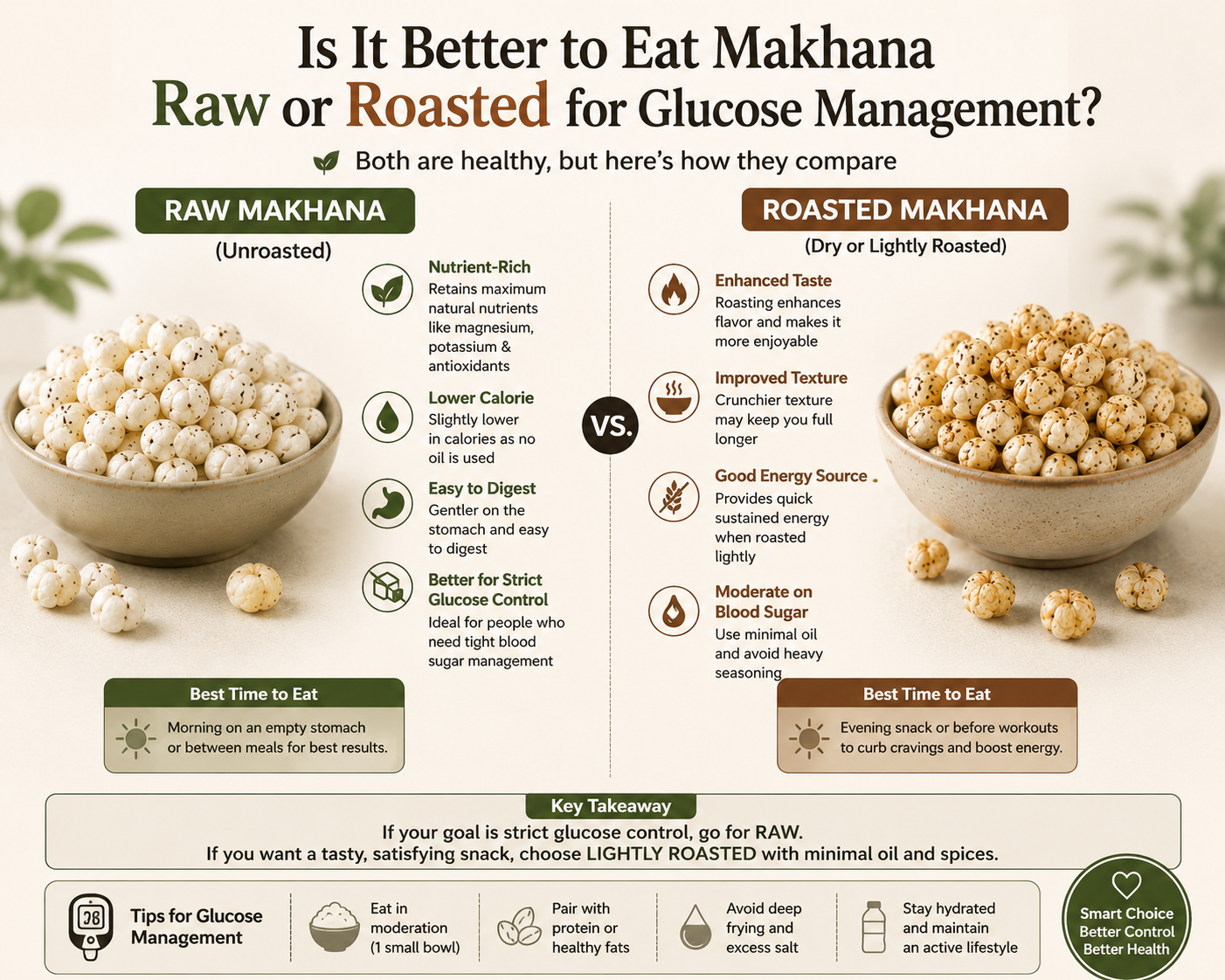
Is It Better to Eat Makhana Raw or Roasted for Glucose Management?
If you are managing blood sugar levels or simply trying to make smarter snacking choices, you have probably come across makhana — the humble yet powerful fox nut that has been a part of Indian nutrition for centuries. But here is a question that many health-conscious individuals ask: is it better to eat makhana raw or roasted for glucose management? The answer is more nuanced than you might think, and understanding the difference can help you make the best choice for your health and wellness goals.
At Nutriwow, we believe that how you eat your food matters just as much as what you eat. So let us dive deep into the nutritional science behind raw versus roasted Makhanaand how each form affects blood glucose levels.
What Makes Makhana a Smart Choice for Glucose Management?
Makhana, also known as fox nuts or lotus seeds, is naturally low in glycemic index (GI). This means it releases glucose into the bloodstream slowly, preventing sudden spikes in blood sugar. For people with diabetes or insulin resistance, this is a critical quality in a snack food. Compared to traditional Indian snacks like namkeen, biscuits, or fried chips, makhana stands out as a genuinely healthy eating option that supports stable energy levels throughout the day.
Makhana is rich in complex carbohydrates, dietary fibre, plant-based protein, and essential minerals like magnesium and potassium. These nutrients collectively support better nutrition, reduce inflammation, and contribute to improved insulin sensitivity over time. However, the preparation method — raw versus roasted — does influence the overall nutritional and glycemic impact of makhana.
Understanding Raw Makhana: Nutrition and Glucose Impact
Raw makhana is essentially unprocessed fox nuts in their natural dried form. They have a slightly chewy texture and a bland, starchy taste. From a nutritional standpoint, raw makhana retains all of its naturally occurring enzymes, antioxidants, and micronutrients in their most intact form.
When it comes to glucose management, raw makhana has the following characteristics:
- Higher resistant starch content: Raw makhana contains a greater proportion of resistant starch, which resists digestion in the small intestine and acts more like dietary fibre. This means slower glucose absorption and a lower effective glycemic response.
- Intact cellular structure: The unbroken cell walls in raw makhana slow down enzymatic breakdown, reducing the rate at which carbohydrates are converted into glucose.
- No added ingredients: Raw makhana contains no added salt, oil, or flavourings that could indirectly affect blood sugar or overall health.
However, raw makhana is not commonly consumed as a standalone snack in India because of its hard texture and lack of flavour. Most people find it difficult to chew and digest in large amounts. For this reason, raw makhana is often soaked or cooked before consumption.
Understanding Roasted Makhana: How It Changes Nutritional Dynamics
Roasting is the most popular way how to eat makhana in India. When makhana is dry-roasted or lightly pan-roasted with a small amount of ghee or oil, its texture becomes light, crispy, and much more enjoyable to eat. But what does roasting do to its glucose management potential?
- Slight increase in glycemic index: Heat breaks down some of the resistant starch in makhana, converting it into more readily digestible carbohydrates. This can marginally increase the glycemic response compared to raw makhana. However, the increase is modest and roasted makhana still maintains a relatively low GI compared to most Indian snack options.
- Improved digestibility: Roasting makes the starch granules in makhana more accessible to digestive enzymes. For individuals with sensitive digestive systems, this can actually be beneficial, even if it means slightly faster glucose release.
- Enhanced satiety: The crunchy texture of roasted makhana tends to encourage mindful eating and better portion control. Eating slowly and chewing thoroughly supports better glucose regulation overall.
- Flavour and adherence: When you enjoy your food, you are more likely to stick to healthy eating habits. Lightly roasted makhana — especially the kind crafted by Nutriwow with minimal additives and thoughtful seasoning — makes it far easier to replace unhealthy snacks consistently.
The Verdict: Which Form Is Better for Glucose Management?
From a purely scientific perspective, raw makhana has a slightly lower glycemic impact than roasted makhana due to its higher resistant starch content. However, the difference is not dramatic enough to make raw makhana significantly superior for most people managing blood sugar.
Here is what truly matters for diabetes management and overall wellness:
- Portion size: Whether raw or roasted, eating makhana in moderation (approximately 20-30 grams per serving) is key to keeping glucose levels stable.
- Pairing with protein or healthy fats: Combining makhana with a source of protein (like yoghurt or a handful of nuts) or healthy fat (like a drizzle of ghee) further lowers its effective glycemic load, regardless of whether it is raw or roasted.
- What you add during roasting: Dry-roasting makhana with minimal oil and avoiding high-sugar seasonings keeps the glucose impact low. Be cautious of store-bought roasted makhana that contains excessive salt, sugar coatings, or artificial flavouring.
- Consistency over perfection: A snack you will actually eat regularly — like delicious roasted makhana from Nutriwow — beats a theoretically perfect food you avoid because it is unpalatable.
How to Eat Makhana for the Best Blood Sugar Results
Understanding how to eat makhana strategically can make a real difference in your glucose management routine. Here are some practical tips:
- Choose lightly dry-roasted makhana with minimal oil for daily snacking — it balances taste, digestibility, and glycemic impact.
- Consume makhana as a mid-morning or evening snack to prevent blood sugar dips between meals.
- Avoid eating makhana with high-sugar accompaniments like honey-coated versions or sugary dips.
- Opt for Nutriwow's roasted makhana range, which uses clean ingredients without unnecessary additives — making it a trustworthy choice for mindful, health-driven snacking.
- If you prefer raw makhana, try soaking it in water briefly or adding it to kheer or curry where it cooks gently without heavy processing.
Final Thoughts on Makhana and Glucose Management
Both raw and roasted makhana are excellent choices for anyone focused on glucose management, diabetes support, and overall health. Raw makhana edges ahead marginally in terms of resistant starch and glycemic index, but roasted makhana wins significantly in terms of palatability, adherence, and practical everyday use.
The best approach is to choose high-quality, minimally processed roasted makhana — like what Nutriwow offers — and consume it as part of a balanced diet rich in fibre, protein, and whole foods. When snacking becomes both enjoyable and supportive of your wellness goals, that is when real, lasting change happens.
So the next time you reach for a snack, remember: a crispy handful of Nutriwow makhana is not just a treat — it is a thoughtful, science-backed step towards better blood sugar health.