How to Store Nuts to Keep Them Fresh and Crunchy for Months
By Vikram Joshi (Sports Nutrition Advisor) · 25 June 2026
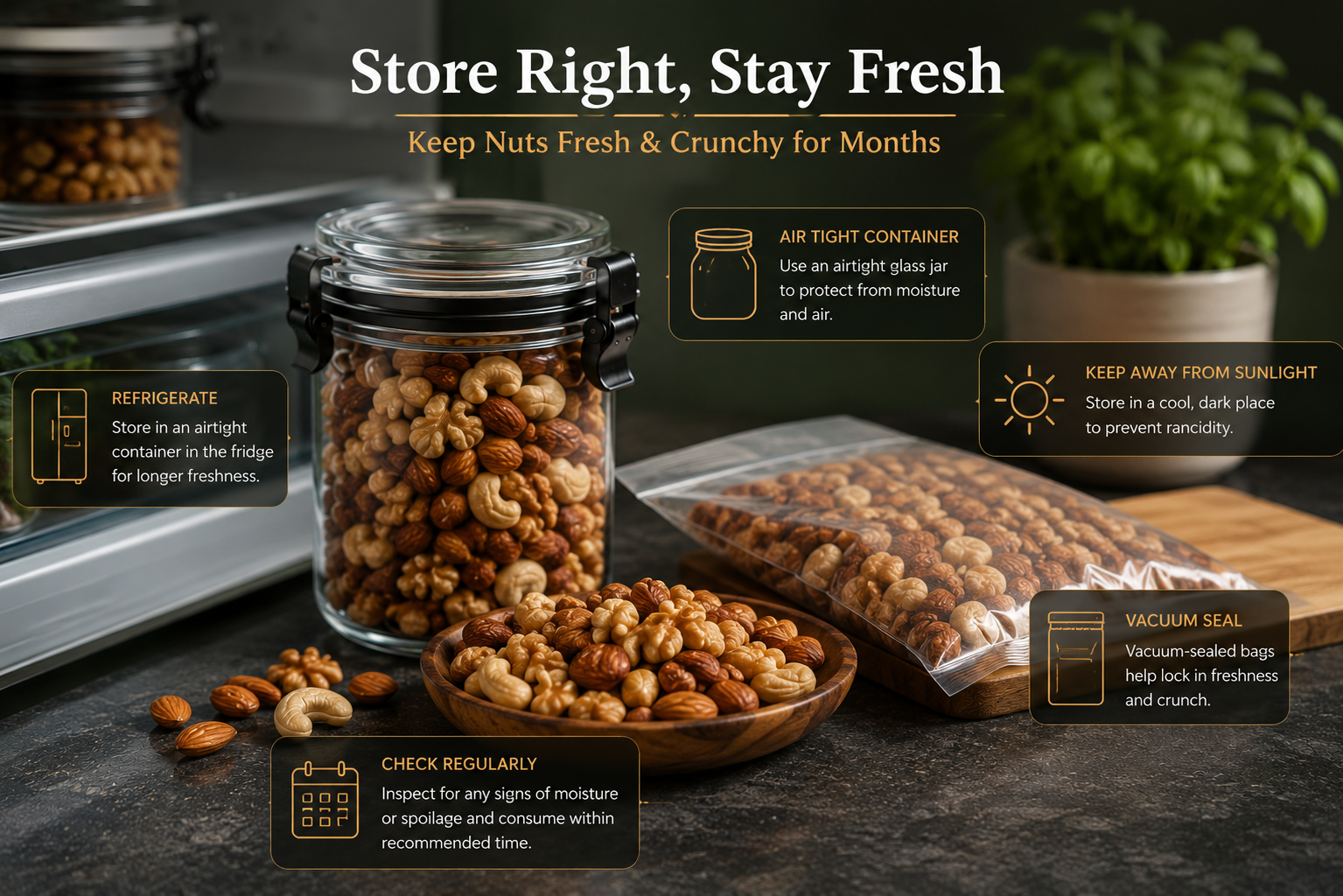
How to Store Nuts to Keep Them Fresh and Crunchy for Months
Nuts are one of nature's most perfect snacks — packed with healthy fats, protein, fibre, and essential vitamins and minerals. Whether you enjoy a handful of almonds as a mid-morning snack, sprinkle walnuts over your morning oats, or munch on cashews during an evening break, nuts are a staple in most Indian households. But here is a question many people overlook: are you storing your Nutsthe right way?
Improper storage is one of the most common reasons why nuts go stale, turn rancid, or lose their satisfying crunch long before their expiry date. At Nutriwow, we believe that getting the best out of your nuts starts the moment you bring them home. This guide will walk you through everything you need to know about nut storage tips to help you maximize nut shelf life, preserve freshness, protect nutrition, and ensure complete food safety.
Why Proper Nut Storage Matters
Nuts are rich in unsaturated fats — the kind that are good for your heart but also the kind that can oxidize when exposed to air, heat, light, or moisture. When this oxidation happens, your nuts become rancid. Rancid nuts not only taste and smell unpleasant, but consuming them regularly can also introduce harmful compounds into your diet. Proper storage slows down this oxidation process, protecting both the flavour and the nutrition your body needs.
Beyond rancidity, improper storage can lead to moisture absorption, which causes nuts to become chewy and soft instead of satisfyingly crunchy. It can also make them susceptible to mould and pest contamination — a serious food safety concern, especially in India's humid climate.
The Golden Rules of Nut Storage
1. Choose the Right Container
The first step to preserving nut freshness is selecting the right storage container. Always opt for airtight containers — glass jars with tight-fitting lids, vacuum-sealed bags, or BPA-free airtight plastic containers work exceptionally well. Airtight containers limit the exposure to oxygen, which is the primary trigger for fat oxidation in nuts.
Avoid storing nuts in the original packaging once it has been opened, especially if it is a loosely folded plastic bag. If you must use the original packet, seal it tightly with a clip or rubber band and place the entire packet inside an airtight jar or container.
2. Keep Them Away from Heat
Heat is a major enemy of nut freshness. Storing nuts near your stove, microwave, or any warm appliance will accelerate rancidity significantly. The ideal storage temperature for nuts at room temperature is below 25°C. In most Indian cities, especially during summer months, room temperatures can easily exceed this threshold.
If your kitchen tends to get warm, consider moving your nut supply to a cooler cupboard, pantry shelf away from the cooking area, or better still, the refrigerator.
3. Refrigerate for Extended Freshness
One of the most effective storage tips to maximize nut shelf life is refrigeration. When stored in an airtight container in the refrigerator, most nuts can stay fresh for up to six months to a year. The cool temperature drastically slows down the oxidation of fats and keeps the nuts crisp and flavourful.
- Almonds: Up to 12 months in the refrigerator
- Cashews: Up to 6 months in the refrigerator
- Walnuts: Up to 12 months in the refrigerator
- Pistachios: Up to 12 months in the refrigerator
- Peanuts: Up to 6 months in the refrigerator
Always bring refrigerated nuts to room temperature before eating for the best texture and flavour experience.
4. Consider Freezing for Long-Term Storage
If you buy nuts in bulk — which is a smart and economical choice — freezing is your best option to maximize nut shelf life even further. Properly frozen nuts can remain fresh for up to two years without significant loss of flavour or nutrition.
To freeze nuts correctly, divide them into portion-sized quantities and place each portion in a separate zip-lock freezer bag or airtight freezer-safe container. Remove as much air as possible before sealing. When you need a portion, simply take it out and let it thaw at room temperature for 15–20 minutes — no reheating needed.
5. Protect Them from Light
Light exposure, particularly direct sunlight, can degrade the quality of nuts quickly. UV rays accelerate fat oxidation just like heat does. Always store your nuts in opaque containers or in a cupboard or drawer that does not receive direct sunlight. If you are using glass jars, keep them inside a closed pantry rather than on an open kitchen shelf.
6. Keep Them Dry at All Times
Moisture is another critical factor affecting nut freshness and food safety. Even small amounts of moisture can cause nuts to become soft, promote mould growth, and shorten their shelf life considerably. Always use a dry spoon or clean dry hands when scooping nuts from a container. Never store nuts near the sink or in areas with high humidity.
In India, the monsoon season can make kitchen environments particularly humid. During these months, it is especially important to ensure your nut containers are completely airtight and consider adding a food-grade silica gel packet to your storage container to absorb any ambient moisture.
Special Tips for Roasted Nuts
Roasted nuts, like the delicious range offered by Nutriwow, require slightly more careful storage than raw nuts because roasting changes the fat structure and can make them more susceptible to going stale. Here is how to keep roasted nuts crunchy for longer:
- Always allow roasted nuts to cool completely before storing them in an airtight container, as trapping steam will cause sogginess.
- Store roasted nuts in the refrigerator if you plan to keep them for more than two to three weeks.
- Avoid storing roasted nuts with raw nuts, as the flavour profiles can transfer over time.
- If roasted nuts have lost their crunch but are not rancid, spread them on a baking tray and toast in an oven at 150°C for 5–10 minutes to restore their crispness.
How to Tell If Your Nuts Have Gone Bad
Even with the best storage practices, it is important to check your nuts regularly. Here are the key signs that your nuts may no longer be safe to eat:
- Smell: Rancid nuts have a sharp, bitter, paint-like, or sour odour. Fresh nuts should smell mild, pleasant, and slightly buttery.
- Taste: If nuts taste bitter or unpleasant, discard them immediately.
- Appearance: Any signs of mould, discolouration, or unusual spots are a clear food safety warning sign.
- Texture: Excessively soft or chewy nuts (in varieties that should be crunchy) may have absorbed moisture and could be on their way to spoiling.
Nutriwow's Commitment to Freshness
At Nutriwow, every pack of nuts is carefully sourced, processed, and sealed to ensure maximum freshness and nutrition from the moment it leaves our facility to the moment it reaches your hands. Our premium airtight packaging is designed to extend shelf life naturally, so you always get that perfect crunch with every bite.
However, once you open a Nutriwow pack, following the storage tips outlined in this guide will ensure your nuts stay as fresh, crunchy, and nutritious as the day they were packed.
Final Thoughts
Storing nuts the right way is a small effort that makes a big difference — both to your wallet and your health. By choosing airtight containers, keeping nuts away from heat and light, refrigerating or freezing bulk supplies, and staying vigilant about moisture and spoilage, you can easily enjoy fresh, crunchy, and nutritious nuts for months. Make these smart storage tips a habit, and let every handful of nuts from Nutriwow deliver the full goodness it was meant to.