Almonds vs. Walnuts: Which Nut is Better for Women's Health?
By Rahul Arora (Wellness Coach) · 17 June 2026
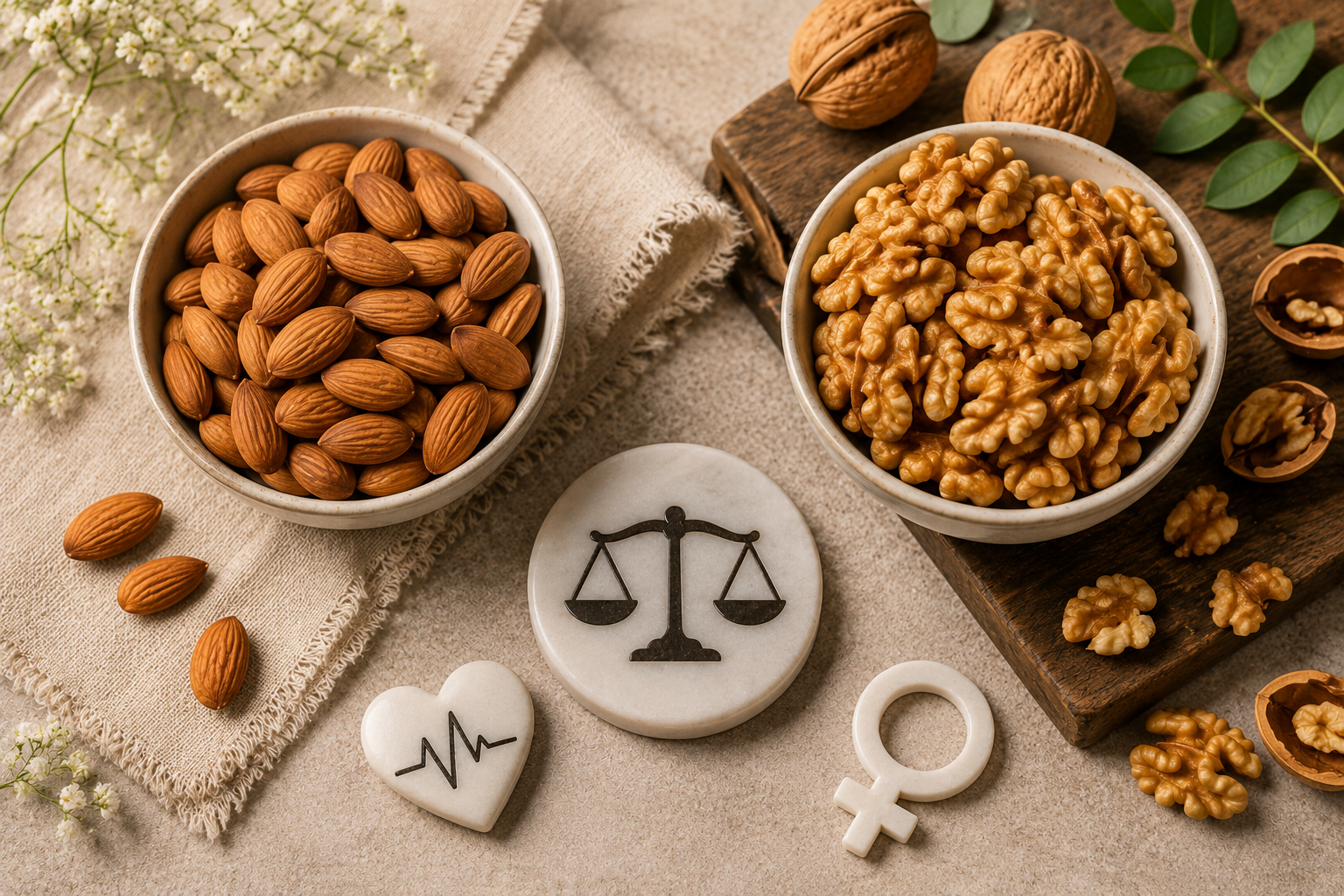
Almonds vs. Walnuts: Which Nut is Better for Women's Health?
When it comes to healthy snacking, nuts are undoubtedly among the most nutrient-dense options available. For women in particular, choosing the right nut can make a meaningful difference to hormonal health, bone density, heart function, and overall vitality. The great debate of almonds vs walnuts is one that comes up frequently in nutrition conversations — and for good reason. Both are powerhouses of nutrition, but they offer different benefits depending on your health goals. This Nutriwow guide dives deep into how each nut supports women health, so you can make the smartest snacking choice for your body.
Nutritional Profile: Almonds vs Walnuts at a Glance
Before we compare benefits, let us understand what each nut brings to the table nutritionally. Both almonds and walnuts are classified as healthy nuts, but their macronutrient and micronutrient composition differs quite significantly.
Almonds (per 28g / approximately 23 almonds)
- Calories: 164 kcal
- Protein: 6 grams
- Healthy fats: 14 grams (mostly monounsaturated)
- Fibre: 3.5 grams
- Vitamin E: 37% of Daily Value
- Calcium: 76 mg
- Magnesium: 76 mg
Walnuts (per 28g / approximately 14 halves)
- Calories: 185 kcal
- Protein: 4 grams
- Healthy fats: 18 grams (rich in polyunsaturated fats and Omega-3)
- Fibre: 2 grams
- ALA Omega-3: 2.5 grams
- Copper: 45% of Daily Value
- Manganese: 42% of Daily Value
As you can see, almonds win on protein, fibre, Vitamin E, and calcium — all nutrients extremely relevant to women's nutritional needs. Walnuts, on the other hand, are unmatched when it comes to Omega-3 fatty acids, which play a crucial role in brain health and inflammation management.
Heart Health: A Critical Concern for Indian Women
Heart disease is one of the leading causes of mortality among women in India, yet it often goes underdiagnosed and undertreated. Both almonds and walnuts contribute positively to cardiovascular health, but through different mechanisms.
Almonds are rich in monounsaturated fatty acids and Vitamin E, both of which help reduce LDL (bad) cholesterol levels without lowering HDL (good) cholesterol. Regular consumption of almonds has been linked to improved arterial health and reduced oxidative stress — a key factor in heart disease prevention.
Walnuts are exceptional for heart health due to their high Omega-3 ALA content. Alpha-linolenic acid, found abundantly in walnuts, has been shown to reduce inflammation in blood vessels, lower blood pressure, and decrease the risk of arterial plaque formation. For women who do not regularly consume fatty fish, walnuts become an especially vital plant-based source of Omega-3s.
Verdict for heart health: Walnuts have a slight edge due to their superior Omega-3 content, though almonds are equally beneficial for cholesterol management.
Bone Health: Especially Important for Women Post-30
Women begin to lose bone density faster than men, particularly after menopause. Osteoporosis affects a disproportionately large number of Indian women. Nutritional support for bones should begin well before menopause, ideally in a woman's 20s and 30s.
Almonds are a standout here. They contain calcium, magnesium, and phosphorus — three minerals that are directly involved in building and maintaining bone mineral density. A small handful of almonds daily can meaningfully contribute to your calcium intake, particularly relevant for women who are lactose intolerant or follow a plant-based diet.
Walnuts, while not as calcium-rich as almonds, contain manganese and copper, which support bone formation and collagen synthesis. These minerals are often overlooked but play an essential supporting role in skeletal health.
Verdict for bone health: Almonds win clearly for bone health due to higher calcium and magnesium content.
Hormonal Balance and Reproductive Health
For women across different life stages — from menstruation to pregnancy to menopause — hormonal balance is deeply tied to diet. Both almonds and walnuts offer nutrients that support the endocrine system.
Almonds are rich in magnesium, which helps regulate cortisol (the stress hormone), supports insulin sensitivity, and eases PMS symptoms like bloating, cramps, and mood swings. Vitamin E in almonds also plays a role in progesterone production and may help manage symptoms of PCOS.
Walnuts contain phytoestrogens — plant-based compounds that can mildly mimic oestrogen in the body. This makes walnuts particularly interesting for perimenopausal and menopausal women, as they may help reduce the intensity of hot flashes and mood fluctuations. Their Omega-3 content also supports foetal brain development during pregnancy.
Verdict for hormonal health: Both nuts are beneficial — almonds for PMS and PCOS management, walnuts for menopause and pregnancy support.
Brain Health and Mental Well-being
Women are statistically more prone to anxiety, depression, and cognitive decline than men, making brain-supportive nutrition particularly important. This is one area where walnuts take a clear lead.
Walnuts contain DHA, a type of Omega-3 fatty acid that is a primary structural component of the brain. Studies have shown that regular walnut consumption is associated with improved memory, focus, and mood regulation. Their antioxidant content also helps combat oxidative stress in brain cells, which is linked to neurodegenerative diseases.
Almonds are not without mental health benefits. Vitamin E in almonds is associated with reduced risk of cognitive decline, and their magnesium content helps manage anxiety by supporting the nervous system. However, walnuts are more comprehensively studied for direct brain benefits.
Verdict for brain health: Walnuts are the superior choice for cognitive and emotional well-being.
Weight Management and Satiety
Both nuts can support healthy weight management when consumed mindfully. For women juggling busy lifestyles, a snack that keeps you full and energised is essential.
Almonds have more protein and fibre per serving, which promotes satiety and helps control blood sugar spikes. They are slightly lower in calories than walnuts and are an excellent pre-workout or mid-morning snack.
Walnuts are more calorie-dense but their healthy fats are equally satisfying. Research suggests that the body does not absorb all the fat in walnuts due to their cell structure, making their actual calorie impact slightly lower than listed.
Verdict for weight management: Almonds are marginally better for calorie-conscious snacking.
The Nutriwow Guide Recommendation
The honest answer to the almonds vs walnuts debate for women health is this — you do not have to choose just one. These two healthy nuts complement each other beautifully. Almonds support your bones, skin, hormonal balance, and weight goals. Walnuts nourish your brain, heart, and mental wellness. Together, they create a nutritional synergy that addresses the unique health demands women face at every stage of life.
As a general daily recommendation, aim for 10-12 almonds and 2-4 walnut halves as part of a balanced diet. Opt for raw or dry-roasted versions without added salt or sugar to maximise their natural benefits.
At Nutriwow, we believe that smart snacking is the foundation of lasting wellness. Whether you choose almonds, walnuts, or both — make your snack choices count, one nourishing handful at a time.